

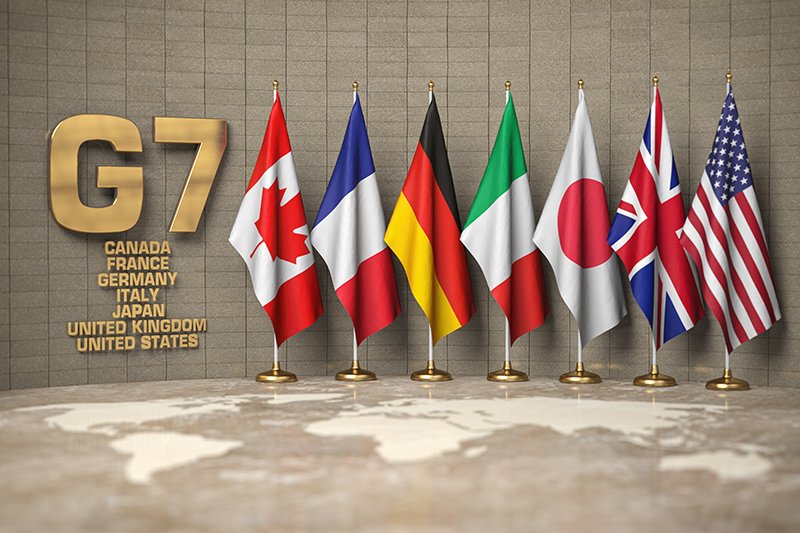
There is a possibility of imposing additional sanctions on Russia by the G7 countries. During the three-day summit starting on May 19, the G7 countries have put forth joint proposals for coordinated actions to compel Russia to end the war against Ukraine and enforce further sanctions.
The G7 countries, including the United States, United Kingdom, Canada, France, Germany, Italy, and Japan, have already imposed strict sanctions against Russia. However, according to experts, the existing sanctions will be intensified, particularly in the sectors of oil and energy.
The European Union is also considering assisting trade companies to mitigate the impact of sanctions on Russia.
Josep Borrell, the High Representative of the European Union for Foreign Affairs, stated in an interview with the Financial Times that the European Union should also impose sanctions on the revenue generated from Indian goods imported into Russia.
Furthermore, the Biden administration is taking measures to gain further control over high-tech exports.
Despite the hospitality offered, the impact of European and American sanctions on Russia has not been as significant as Western countries had anticipated. The Russian economy experienced a mere 2.1% decrease in volume in 2022, despite the sanctions.
Despite the absence of trade with G7 countries, China, India, and Turkey have significantly increased their revenue from Russian coal, oil, and gas. As a result, Western sanctions have had a relatively limited impact on the Russian economy.
According to international media, the possibility of increasing sanctions on Russia is indicating disagreements among G7 countries. European G7 members are considering permanently shutting down the gas pipeline from Russia, while other European countries are divided on this issue.